
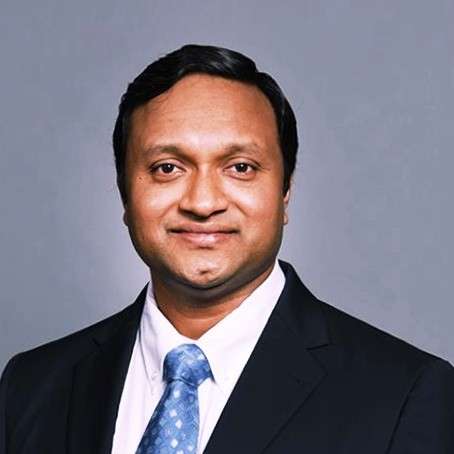
Our guest is Shylesh Krishnan, Co-Founder and former CEO of ThoughtFocus—a global technology firm that scaled to more than 2,800 employees across five countries. But this conversation isn’t about headcount. It’s about how leaders architect organizations that grow without losing alignment, accountability, or culture. Shylesh introduces his RPM PulseCheck—a leadership platform designed to give CEOs and investors real visibility into engagement, leadership readiness, and cultural health inside scaling organizations.
For those operating in private equity, family offices, or acquisition-driven environments, this is the real question: How do you scale performance without introducing hidden risk into the system? And how do you ensure that as technology accelerates, your people—not just your tools—remain your competitive advantage? If you’re building, acquiring, or leading at scale, this episode will challenge how you think about growth—and what actually sustains it.
Transcript
Maureen: So Shylesh, welcome to the Get Hired Up podcast.
Shylesh: Thank you for having me, Maureen. I appreciate your time.
Maureen: It’s absolutely my pleasure. So Shylesh, tell us a little bit about who you are and about your most recent journey with ThoughtFocus.
Shylesh: Sure. ThoughtFocus has been in existence for last 21 years. I am one of the co -founders of ThoughtFocus. We built this company from ground up and grew it to a strong employee base of roughly about 2 ,800 plus employees world over in about five different countries. So truly, from my vantage point, people are the assets of this company. And I’m their leader in terms of trying to bring cohesion to the entire employee workforce that we have.
Maureen: I know a little bit about what ThoughtFocus does, but why don’t you tell the audience what your key products and services are, who you serve?
Shylesh: ThoughtFocus primarily stands out in the market for providing the highest quality of technology services. And primarily we cater to two large industries. One is the financial services industry and then manufacturing sector. These are the two core industries that where we provide technology services and followed by an educational vertical where we have some presence as well. But by and large, we provide technology services. When I say technology services, we kind of provide tools custom software, payment processing, mortgage processing softwares, and tools that enable some of our customers to kind of leapfrog their advancements in terms of technology. Now, a recent addition to that suite of products is our AI offering as well, which has actually been accepted in the market pretty well. And we have seen customers get on to that bandwagon and really take some bold steps to adopt AI. And ThoughtFocus has kind of been able to help them lead that journey into that AI space. In fact, one of the customers that I know, we’ve actually saved them huge, huge. It was actually in a background services, a mortgage slash background services area. And we’ve been able to significantly save dollars for them. In fact, this particular organization had a large presence of offshore folks across the globe who actually did lots of back office work for them and having implemented an AI tool. that kind of goes through and picks the document and does what it’s supposed to do organically, you know, which brought the accuracy of this tool itself to roughly 99%.
Maureen: So we talked a little bit about this topic I’m going to bring up in a moment before we started the podcast. And this is something that’s been in the news. It’s the elephant in the room everywhere. wherever AI is present, and that’s the elimination of jobs. I think AI is a fantastic tool when used appropriately, and I realize it adds a tremendous amount of proficiency, efficiency, and reduces errors in so many ways. I mean, even as far as radiologists reading X -rays, AI does a better job of reading X -rays sometimes than the doctors themselves. But I guess the elephant in the room here, and I’d love for you to address it, is the loss of jobs. How would you address that, or what’s your perspective on that?
Shylesh: This answer might sound a little bit philosophical, but humans as a race, we’ve always evolved using tools. If you go back ages and ages back, we’ve always adapted to using new tools and thereby our living or the way we conduct ourselves in a civilized world have always improved. So if you take about back when tractors came into the agricultural market, we all thought that farmers are all kind of going to go and there’s a lot of job losses and things like that. Yes, there was, but the efficiency that the tractors, when they came into that agriculture sector, really boosted the production, even though there was job losses initially perceived. However, the production and quality of output changed the course of humanity in a big way. And it’s the same with AI. I should state that AI is here for to stay and it will actually bring a drastic change from a velocity perspective, the way we conduct business to the way we live today, right? So all of this, there will be a huge, huge leap in terms of our own ability to do certain things. Today, if you ask AI, it’s actually doing things that human mind can not comprehend that amount of computations. So going fast forward some two to three years, I’m not even saying a horizon of five to 10 years, right? Two to three years, we will see AI impacting every individual’s life on earth. And in my belief, it’s only going to actually take our humans as a society to a next level where we become more efficient in terms of our own day to day living.
Maureen: That’s a really good answer. And as long as we have governance practices in society that protects our population, you know, I agree wholeheartedly. I remember older than you are, I’m pretty sure, but I remember back in the 90s, I worked in the banking industry. I worked for the Federal Bank of Canada. way back, but it was my very first job out of college. And, uh, we automated the office. We were the, you know, at the forefront of all, they called it office automation back then. So we went from ticker tape to communicate with other banks across the country to what was at fax. It was the fax machine. And it was computers where we entered data that would helped us to do complex analysis and, and. and so on and so forth. So I agree wholeheartedly. There was a lot of talk back then about how computers were going to take over and so forth. So I appreciate your perspective on this and the reminder that the gristmill was one of the original aspects of AI if you look at it in terms of automation and improving efficiency for people.
Shylesh: Absolutely. This is not something that has actually started now, right? I mean, way back in the 1930s or so when when so -called computer machines were kind of started, human mind has been actually working towards this. And I think we’ve made a significant leap in with the LLM technology that’s available today. I think we’re making a significant leap I should say we’ve already made the significant leap. It’s just that it’s not being put into many day -to -day applications. that we have, but once it comes, trickles down into our daily life, we will see a huge, huge improvement in terms of the way we conduct business, the way we interact with people, the way we essentially live, right? We will start to see that impact.
Maureen: Absolutely. And we started the conversation talking about the reduction of workforce and headcount as a result of the implementation of AI tools. Now, Shylesh, you and I both have a perspective on employee engagement. I think that is truly reciprocal in terms of we want to ensure that our employees are happy. And I don’t say that from a Pollyanna point of view. I mean, satisfied employees produce better and stay longer. And I know you have a proprietary approach to employee engagement called RPM. I would love for you to share with the audience what that is and how it works.
Shylesh: Sure. In any enterprise which conducts business, you know, I am a firm believer that employees are its valuable assets. And unless the employees are in a happy state of mind, the production or the output that they produce for the organization is not going to be a top quality. So from the inception of my business, company ThoughtFocus and other ventures that I’ve had in the past, I’ve always kind of told people to kind of focus on employees and the employees as an asset. Until we make that mind shift, the companies will not be able to scale. In ThoughtFocus, what we actually did was we came out and under my leadership, we actually institutionalized a program called RPM, which basically, at the time, stood for how to improve an employee’s engagement within the organization. And RPM actually stands for reporting manager, reportee, and P stands for a peer, and then the M stands for the mentor. So, Every employee, if you kind of think of an employee as a point inside a triangle, to balance him or to balance the triangle, you need three solid heavyweights that can hold this employee. So that’s how we visually, if you can kind of think about this in your mind, we started to kind of put that out on a piece of paper.
And then we, in fact, in some of my conference room discussions, we’ve had big placards made out of this where the employee is at the center of this triangle and there’s a reporting manager on top of the vertex of the triangle. And then to give a good foundation to that employee, we have a peer and then we also have a mentor. Now the question becomes why these three people? Normally with the employee will have a relationship with a manager which is quite transactional in many cases because he or she gets work assigned and then she completes the work and gets back and they kind of do what I call as marching forward the corporate objectives. Now, that’s just not the employee comes to work for, right? It’s the overall well -being of the employee that we need to think about. And that’s where we came up with this concept of he should actually have a mentor who he or she can actually openly talk about all the things that during the workday or outside of the workday that employee is actually going through. The mentor can kind of accordingly advise, and obviously the mentors are trained.
We actually take them through a mentor mentorship program, how to conduct mentorship programs, and we take them through a complete in -depth two weeks program that they all have to go through to become a mentor. So they’re able to give right advices to this employee, whether it’s handling of a tough manager, or sometimes, you know, getting the work as per the request of the manager, all of that thing to kind of help. And then comes the peer. And what, I mean, what we found interesting was if I’m able to kind of select a peer group that the employee really likes, he or she will be able to share some of the intricacies or difficulties that this person is actually going through. We actually developed a good tool by means of which we are able to capture the entire 360 of this employee from a peer perspective, from a mentor perspective, and from a reporting perspective. So reporting, I mean, most organizations have that already captured. There are goals set, the tasks getting assigned, all of that happens through the reporting line. But what’s missing is the other two pieces, right? So we actually created a tool for interacting And to my surprise, we were able to kind of move some of the employees to a better level from their own mental maturity. In fact, especially at the junior levels, we were actually able to give them a good foundation the company. So they were able to move higher up within the organization to take on additional and much, much more complex tasks.
Maureen: It reminds me, as you say that, of Maslow’s hierarchy of needs, which is a common framework used for Right. You know, so that’s sort of it sounds to me as though what you’re helping your employees do is become self -actualized. Does that make sense?
Shylesh: Yeah, absolutely. As was said, rightful shelter. And once you have all of that, that’s when you really go above yourself and start thinking. So the basic needs needs to be addressed.
Maureen: Yes. Shylesh, you and I, as we have spoken in this podcast, are both very passionate about employee engagement and creating the culture that sets the organization up well for longevity, for profitability, and for the ongoing sustainability of shareholder and ownership value. Why don’t you tell us a little bit about how RPM came to being and the evolution of that system?
Shylesh: So Maureen, you can actually tell a lot about an organization’s success by just looking or observing its culture. You can have the most ambitious and greatest vision or vision for the organization, but the culture is where the rubber really meets the road. And it’s the DNA of the organization to make the organization successful or not. Then to me, it’s always what is that culture, right?
Maureen: Can you explain your perspective or your definition of culture? Because culture seems to me to be a really subjective word. What do you think?
Shylesh: To me, it’s nothing but a fabric of a shared value system across the organization. More like a belief system, right? What I like to call the organizational rituals and practices is what culture means. It is the personality of the company and at the heart of the culture are the people in the organization. Yes, we can say there are other elements that make up the culture, like tools, technology, processes, but all in all, at the heart, the people are the ones who make or break the culture of the organization. So tying back to this, our journey, we realized as we were building the organization in the early years that Culture is something that needs to propagate even when we are scaling, especially being in the consulting and services industry. It is all about people and scaling them and having to do more with less, right? That’s the mantra that we were all kind of steering towards.
We ended up experimenting with several models and frameworks to build culture, keep the same culture and scale. But we did hit upon some stumbling blocks, few initial failures. But then as we kind of progressed our thinking on kind of building the culture, scaling, we really hit upon a goldmine and a very successful framework, RPM PulseCheck.
Maureen: Was there an inflection point or a pivot point where you and your team said, we need to do this?
Shylesh: Yeah, actually a great question more than that. The thinking of even getting to a framework like this, originated with our growth. You know, we, it’s easy to kind of handle when you are much smaller, 50, 100 people, it’s easy to, you know, impart culture of the organization. It’s easy to kind of manage, but as you start scaling what you did, for one customer, you want to repeat the same experience to the next and the next, that repeatability becomes a challenge. And that’s where I tie this back into that culture. When we started to grow, we started seeing some cracks in our delivery process, in the way we engage with customers, we could see that. And that when we look back that all translated to that team or team of people and the manager who is actually handling the customer. So that’s where we started thinking we need to kind of see a very transparent culture across the organization so that everybody is aligned with one set of goals. And this is like, you know, you’re trying to change the wheels on the car as we are moving. So we had to scale on one hand and develop this. So I would say that inflection point was when we started to scale from a much smaller company as few hundreds into the thousands. That’s when the entire shift happened to kind of even start thinking about a people, how to kind of get the best out of every individual so that in our business, individuals are the ones who actually delight our customers.
So that meant a lot to have an employee who’s holistically grounded and is able to cater to customer’s requests. And then also, as I said, being in the consulting and technology services space, attrition of employees is a big challenge. So at this crucial phase is where we came up with this RPA model. And again, I also think we as human beings, we always carry work home, and also we carry home to work. There is a very thin line between work and home these days.
Maureen: I agree with that completely and Maddy, who was our podcast producer and I talk about this a lot and I refer to it as work life harmony versus work life balance because I don’t believe that they can be delineated in a balanced way. I think you’re right. As Gary Ridge, and he’s the former CEO of the WD -40 company, who was a guest on this podcast a couple of years ago, he said, you know, you don’t drop your nerving endings at the door when you walk into work. And I always remembered that. And he’s a huge proponent of employee engagement as well. He and his organization created what I would call a cultural playbook. And they, I think it were five or six values that every employee had to demonstrate in their work. And that’s how they were evaluated. And those five or six values could be used as filters for making decisions. So he said that every employee was asked to make a decision based on those six values. And if they couldn’t come to a decision based on those six values, then they would go to the reporting manager and get their feedback. And I thought that that was a really, really efficient way of optimizing decision making in a large organization, different industry from yours, of course, but similar size workforce.
Shylesh: Yeah, I mean, that resonates, in fact, we also had a very similar to that checklist to make a decision, which again goes to my principle of empowering.
Maureen: So Shylesh, this has been a tremendous education and learning of the RPM pulse check. Any other aspects that you would like to share with us today of your process?
Shylesh: Yeah, so one of the biggest revelations of this RPM, I kind of alluded to it a little bit, but it was a giving a very good reflection for some of our leadership team of how they should actually be conducting their businesses. While we always believe that empowering the organization across all levels, we will be able to strive faster and get our services or goods to our customers faster, but it also kind of left our leadership team to start thinking in newer ways. was something that. Without knowing, I would say we started to kind of get some very good ideas percolated upwards in this case for the senior leadership to reflect and ponder upon so that we could start steering an organization. This framework actually allows different facets of the organizations to come out. As I said, one is the innovative thinkers, innovative thinking within the organization. And those things obviously come up. The other thing is predictability of the organization. That was other big reflection that we had. We could start predicting how the organization starts to behave in certain scenarios. So when we have large deals, how does the organization behave when we have a lot of small, small deals, how does the organization behave? So we were able to kind of look at organizational behavior through this tool. While it started as a employee engagement and nurture, and it is still the main emphasis for us to develop this tool was that, but there are other benefits that the organization also gets. Like I said, predictability in the organizational behavior, you could kind of look at attrition in a different manner. In fact, talking about attrition, we could actually predict if this particular employee is going to be with us beyond six months, because we start to get these signals way before anybody could catch. So that to me, these are all the side benefits that we were able to get of the organization. And the best part, Maureen, was we were able to grow in our talent to become the leaders of the future. So we were able to pull a lot of the junior level managers to become senior managers and then some of the senior managers into the leadership team. So this exercise is where it all started. So there are a lot of side benefits while we were only focused on the employee and his holistic engagement with the organization. But what you see here is a lot of side benefits that really matters to the organizational growth.
Maureen: So it has an accretive nature and it produces benefits. It compounds, it’s like compound interest. You start off with this asset and then it’s somewhat self -referential and it grows and it grows and it grows and it produces, to your point, added benefits to this RPM portfolio. Well, Shylesh, this has been tremendous. And I would love to make an invitation to any listener here to reach out to you directly. Where’s the best way for them to find you?
Shylesh: Of course, LinkedIn is a good means to find me, Shylesh Krishnan. Thought Focus is my company that I founded almost 21 years back. So they can find me. And of course, my email is shylesh .krish, that’s S -H -Y -L -E -S -H dot K -R -I -S -H at gmail .com. If you shoot me an email, I typically respond within 24 hours.
Maureen: That’s terrific. So we’ll make sure that that information is repeated in the show notes and a couple more questions for you. The second last one is what has surprised you most in your career so far?
Shylesh: My biggest surprise in all these years is the pace of change that is happening across, right? What is relevant today may be completely irrelevant tomorrow. So all of us need to kind of come with a mindset to embrace change. And the only way for us all as leaders to embrace change is primarily to be open with some of the newer processes, newer tools that are available today for us to kind of explore the world differently. And, and also when I talk about this change, if you really look at it, my own productivity day by day is kind of as having a quantum leap. How I used to function way back 30 years back or 35 years back is very different today to accomplish the exact same task. As long as we are able to embrace change as an individual, it will be much better. And then as an organization, you will be able to evolve and kind of catch up with the new trends.
Maureen: a commitment to continuous learning. And we talked to about the learning organization. And I think that the, you know, the commitment to continuous renewal is important for embracing and managing and harnessing change moving forward. Shylesh, The last question I have for you is what is your favorite restaurant? Can you give us the name of a restaurant or two that you frequent? Maddie, Mostly Maddie puts together a list every year of our guests’ favorite restaurants that we publish at Christmas time.
Shylesh: So Maureen, I’m not a big foodie per se.
Maureen: You must have a hole in the wall somewhere you like to frequent.
Shylesh: I’m not a big foodie. I actually like fusion food. That’s something that I always cherish and across the board. So typically I would you know, wherever I go, I look for fusion food, Italian combination of any of those is what I look for. So if you ask me, what is my favorite, favorite restaurant per se, there’s not one that comes to mind. But any fusion place is where I normally kind of end up because you kind of get a variety of culinary experiences. It elevates your taste buds.
Maureen: Yeah, that’s awesome. Well, Shylesh, thank you so much for joining us today on the Get Hired Up podcast. And I’ll be anxious to keep in touch with you and learn how you’re implementing RPM PulseCheck elsewhere.
Shylesh: Absolutely, Maureen. Pleasure talking to you.